

Key Takeaways
- Proper positioning matters: Always bring the baby to your breast, not your breast to the baby, to prevent nipple pain.
- Classic holds:
- Cradle: Comfort for most daytime feeds.
- Cross-cradle: Best for newborns, giving excellent head control.
- Football hold: Ideal for C-section recovery, large breasts, or twins.
- Side-lying: Perfect for nighttime rest and maternal recovery.
- Laid-back/koala position: Uses gravity to manage fast let-down or reflux.
- Watch for cues: Quiet gulping, relaxed hands, and proper alignment indicate a successful latch.
Breastfeeding Positions
Most people assume there is only one correct way to hold a baby during feeding. In reality, discovering how to breastfeed is a learned skill for both you and your newborn, not a seamless instinct.
Just like arranging pillows to find the perfect spot on the couch, the best breastfeeding positions prioritize your physical comfort. According to lactation experts, pinching or hunching isn't a struggle you must simply endure to succeed.
Relaxing your shoulders actually serves a highly functional purpose. Research shows that releasing muscle tension triggers your let-down reflex, allowing milk to flow freely. By mastering supportive approaches to lactation positioning, you can eliminate back strain and transform feeding time into a truly comfortable experience.
The Golden Rule of Alignment: Why Bringing Baby to the Breast Prevents Nipple Pain
If you hunch over your baby, pause for a quick "body scan." Are your shoulders tense? To learn how to get a good latch breastfeeding, always bring the baby to you, not your breast to the baby. Let the chair support your back, stacking pillows to lift them to chest height.
Next, aim their nose at your nipple instead of their mouth. This slight shift makes your baby tilt their head back, naturally opening their mouth wide to scoop up the breast for a deep, comfortable latch.
Watch for signs of correct infant positioning so they can swallow easily. Proper body alignment for breastfeeding requires them to face you directly, forming a straight line:
- Ears: Aligned with their shoulder.
- Shoulders: Stacked over the hip.
- Hips: Tucked comfortably against your stomach.
Once proper alignment is established, you can choose the best position for your specific needs, starting with the traditional cradle holds.
Comparing the Classics: When to Use the Cradle vs. Cross-Cradle Hold
While positions look effortless on television, tired arms need extra help during those early, frequent feeds. Before lifting your baby, create a supportive "shelf" by resting a firm nursing pillow directly across your lap to naturally bear their weight.
Offering unmatched head control, the cross-cradle hold breastfeeding technique shines as the best feeding position for newborn babies. Support the base of their neck with the arm opposite the nursing side. Your free hand can then use a "C-hold"—forming a 'C' with your thumb and fingers to compress the breast like a sandwich—guiding it easily into a small mouth.
As your baby develops stronger neck muscles, transitioning becomes effortless when comparing the cradle hold vs cross-cradle setups. You simply let their head rest comfortably in the crook of the elbow on the exact same side they are nursing from.
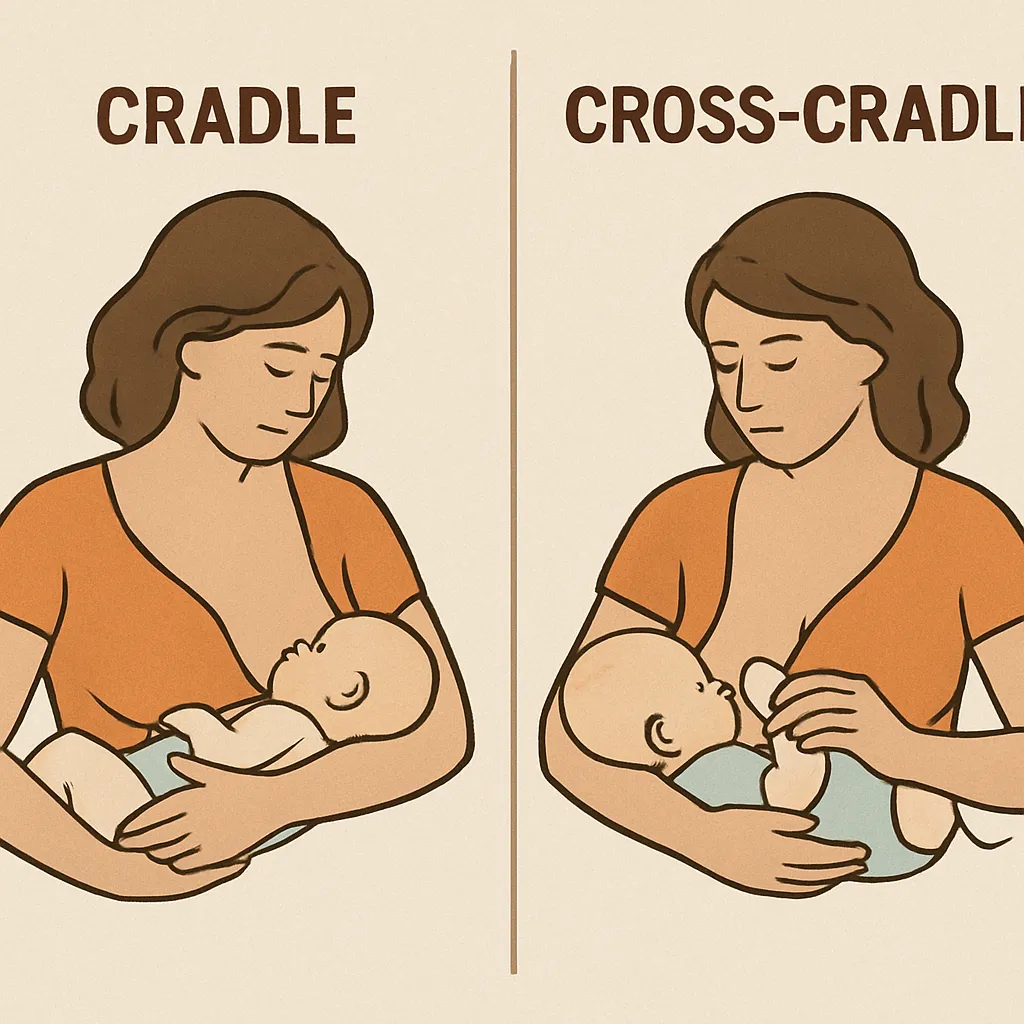
However, if you are protecting a sensitive stomach incision, the football hold offers a safer, more comfortable alternative.
The Football Hold: A Strategic Recovery Position for C-Sections and Large Breasts
If pressure on your stomach makes feeding painful, changing your geography helps. With the football hold newborn position, tuck your baby under your arm like a clutch purse, their feet pointing behind your chair.
This side-tucking setup removes weight from your lap completely. You will find football hold nursing especially helpful for:
- Healing safely during nursing after C-section recovery.
- Managing large breasts by improving latch visibility.
- Using the football hold for twins to feed both babies simultaneously.
Stack pillows beside you to create a supportive shelf, bringing the baby's mouth level with your chest so you can finally drop your shoulders. While this upright position works beautifully for daytime feeds, nighttime exhaustion requires a completely different approach that prioritizes maternal rest.
Sleeping and Nursing Safely: How to Master Side-Lying Breastfeeding
Nighttime exhaustion demands a strategy that lets you rest, highlighting the biggest side-lying breastfeeding benefits. Learning how to nurse lying down lets your healing body physically recover instead of hunching over in the dark.

To begin, lie sideways and pull your baby close so you are belly-to-belly, ensuring they don't have to twist their neck to reach you. Using a pillow support system behind your own back prevents rolling and helps maintain their latch. Figuring out how to breastfeed lying down is a learned skill, so take your time making small adjustments until your shoulders relax.
Because drifting off happens easily, always secure your space using this four-point safety checklist:
- Clear all loose blankets away from the baby.
- Nurse only on a firm mattress.
- Keep the baby far from bed edges.
- Ensure their nose remains completely unblocked.
While this setup saves your energy at night, daytime feeding requires different physics. For babies struggling with fast milk flow, gravity becomes a powerful tool.
Gravity as an Ally: Using Laid-Back Nursing for Fast Let-Down and Reflux Relief
If your baby gags when milk first flows, the solution might be as simple as leaning backward. Using laid-back nursing for fast let-down acts like drinking from a fountain rather than a firehose. Resting comfortably on your pillows at a relaxed angle naturally uses gravity to slow the sudden rush of milk.
This reclined posture also creates a perfect, secure shelf for your little one that works wonders for digestion. You can comfortably straddle them upright across your stomach using the koala hold for reflux babies, which keeps their airway clear and prevents stomach contents from painfully splashing back up.
Maximizing chest-to-chest contact in this position triggers deeply ingrained feeding reflexes. Specialists call this using biological nurturing techniques, allowing your baby to naturally wiggle and latch without you manually steering their head. These supportive physical postures naturally guide you into creating a stress-free, sustainable nursing routine.
Your First Feed Checklist: Creating a Stress-Free Nursing Routine
Instead of toughing out discomfort, you now know how to get a deep latch by adjusting your physical geography. Track your progress with these signs of correct infant positioning:
- Success Markers: Listen for the "Quiet Gulp" and look for relaxed, "Soft Hands."
- Red-Flag Symptoms: A sharp pinch means it is time to break the suction and restart.
This is a learned skill for you both. If preventing nipple pain during feeds remains tricky, calling a lactation consultant is a standard, expected step. Pause for a second: Are your shoulders up by your ears, or are you sinking comfortably into your chair?
See if you’re covered in under a minute!