

关键要点
- Doula “Salary” Varies by Region and Business Model: Most doulas are independent business owners, not salaried employees, and their income depends on location, client load, and operating costs.
- Location Greatly Impacts Fees: Doulas in major cities typically charge higher rates due to increased living expenses and demand, while rural areas often have lower package prices.
- Experience and Services Shape Pricing: Certification, years of experience, and package inclusions (like prenatal visits or postpartum care) significantly influence overall cost.
Understanding Doula Salaries Across Regions
A doula in San Francisco and a doula in rural Alabama both provide vital emotional and physical support during childbirth. So why might one’s service fees be four times higher than the other’s? The answer reveals a complex story about value, experience, and business realities.
Seeing prices that range from under $800 to over $3,000 can be confusing, but this variation is normal for a birth doula. Most operate as independent business owners, so their fees must cover not just their time, but also insurance, training, and the demands of being on-call 24/7.
This guide uncovers the real factors that shape a doula’s income, helping you confidently estimate what to expect in your community, whether you're looking to hire support or become a doula yourself.
What is a Doula, Really? (And What They Don't Do)
A doula is a non-medical professional who acts as a personal guide for your childbirth journey. They provide continuous physical support (like a comforting back rub), emotional support (a calm, reassuring presence), and informational support (helping you understand your options). Their entire focus is on you and your experience.
It is just as crucial to understand what a doula doesn't do. They are not doctors or midwives. A doula does not perform clinical tasks like delivering the baby, running medical tests, or giving medical advice. This distinction is key—they are a vital part of the birth team, but their role is strictly non-medical support.
Why 'Doula Salary' is a Myth: The Reality of a Doula's Income
Thinking of doula compensation as a "salary" is a common misconception. For the vast majority, there is no steady paycheck from an employer. Instead, most doulas operate as independent business owners, much like a freelance photographer or personal trainer. The fee a client pays is the business's revenue, not the doula's personal take-home pay. Answering "can you make a living as a doula?" requires looking at the full picture.
That fee must cover significant business and professional necessities before it becomes income. Common costs for a self-employed doula include:
- Self-employment taxes (which are higher than employee taxes)
- Health insurance premiums
- Professional liability insurance
- Certification fees and ongoing training
- Marketing (website, business cards) and supplies
Furthermore, a doula’s work isn’t scalable like a typical job. Because births are unpredictable, a full-time doula must limit their client load—often to just two or three births per month—to ensure they can be fully present and on-call for each family. This lifestyle creates a natural ceiling on potential earnings, which is an important factor when looking at fees.
How Your Location Shapes Doula Fees: Major City vs. Small Town
Unsurprisingly, one of the biggest factors influencing a doula's fee is their address. A doula practicing in a major metropolitan area like Los Angeles or Boston has a much higher cost of living than a doula in a smaller suburban or rural town. To run a sustainable business, they must build these higher expenses into their client fees, which is a key reason the average doula salary by state can vary so dramatically.
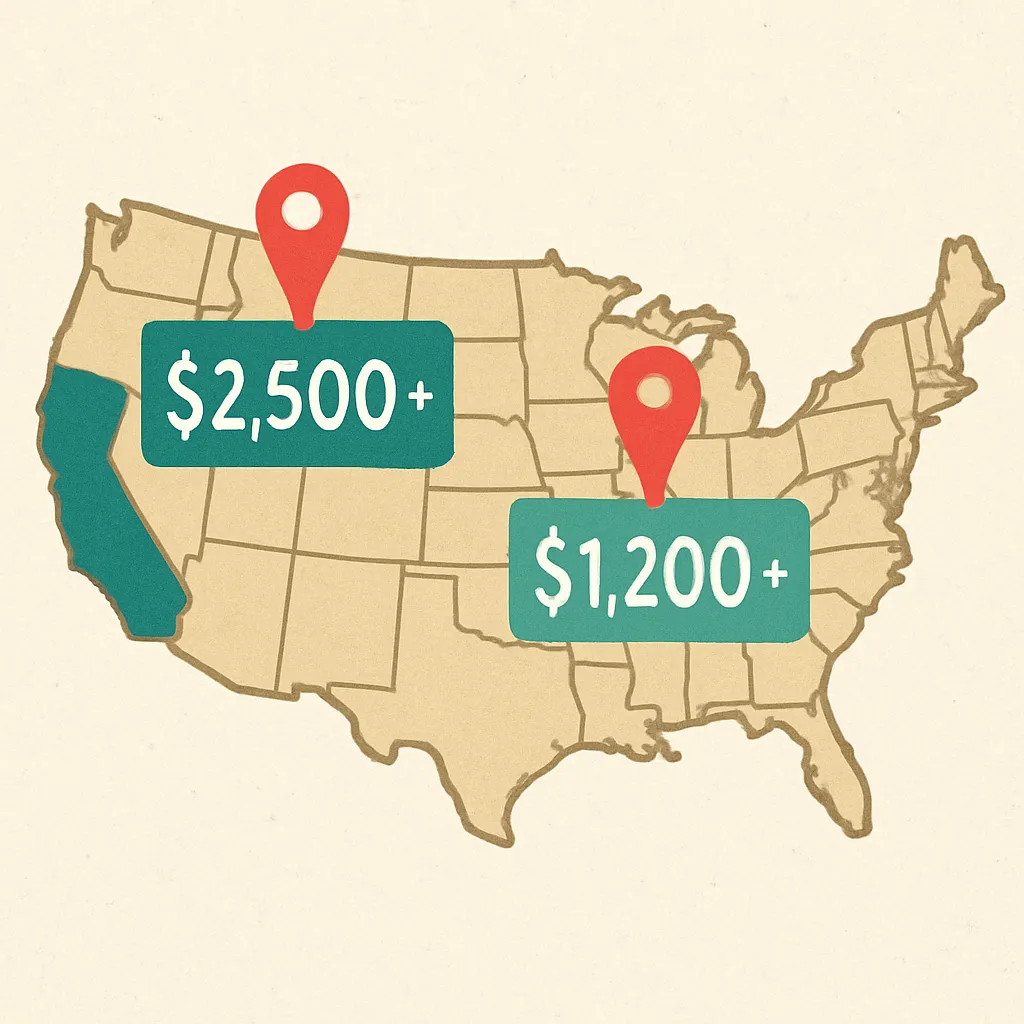
This geographic difference creates a wide spectrum of pricing. For instance, while a birth doula package in a major US city might range from $2,000 to $3,500+, the same core services in a lower-cost region could fall between $800 and $1,500.
Beyond the cost of living, the number of available doulas also plays a role. In a city saturated with doulas, competition can sometimes keep prices in check. Conversely, in a rural area with only one or two experienced doulas, high demand may allow them to charge a premium.
What's in the Package? How Experience and Services Affect Cost
Beyond geography, a doula's experience level is a huge part of the pricing equation. A seasoned professional who has attended hundreds of births has a depth of knowledge that a newly trained doula simply can’t match yet. This expertise justifies a higher fee and is key to increasing your earning potential as a doula over time.
This experience is often reflected in tiered service packages, which helps clarify how to set doula service fees. A doula’s offerings aren't one-size-fits-all. You might see a range like this:
- Basic Package (~$1,200): Includes 2 prenatal visits, on-call support for the birth, continuous labor support, and 1 postpartum check-in.
- Premium Package (~$2,500): Includes everything in the basic package, plus extras like childbirth education classes, lactation consulting, or birth photography.
Finally, the doula certification impact on income is real, as completing a rigorous program signals a commitment to professional standards. While many incredible doulas practice without certification, holding one often allows for higher pricing.
Birth vs. Postpartum Doula: Two Roles, Two Different Pay Models
The service packages discussed so far are almost always for birth doulas, who typically charge a single flat fee. This fee, often between $1,000 and $3,000+, covers all their support, whether your labor is five hours or thirty. This model provides peace of mind, ensuring continuous support without watching the clock.
Postpartum doulas operate differently. Because their work involves scheduled, in-home support for things like newborn care and household help, they usually charge an hourly rate. Wondering what is a typical doula hourly rate? You can expect prices from $35 to over $60 per hour, depending on location and experience.
This key difference impacts the postpartum doula income potential versus a birth doula's. While a birth doula’s income depends on booking a few high-value clients, a postpartum doula builds a steady income with consistent weekly hours.
How to Find the Right Doula for Your Budget: A 3-Step Plan
Now that you know a doula’s price reflects their location, experience, and specific services, you can find the right support with confidence. Here is a simple action plan for researching local rates:
- Search national directories like DoulaMatch.net and filter by your zip code.
- Ask for recommendations in local online parenting groups.
- Visit the websites of 3-5 doulas in your area to compare their stated packages and fees.
This research empowers you to budget for the right support for your family.
一分钟内即可查询是否受保!